Just like other cultures, Japan is home to hundreds (thousands?) of traditional folktales that have been told and retold down the ages. Some stories are funny, some are scary and some are sad but these tales often come with a moral or a lesson to learn.
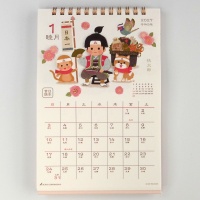
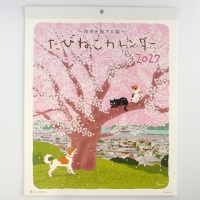
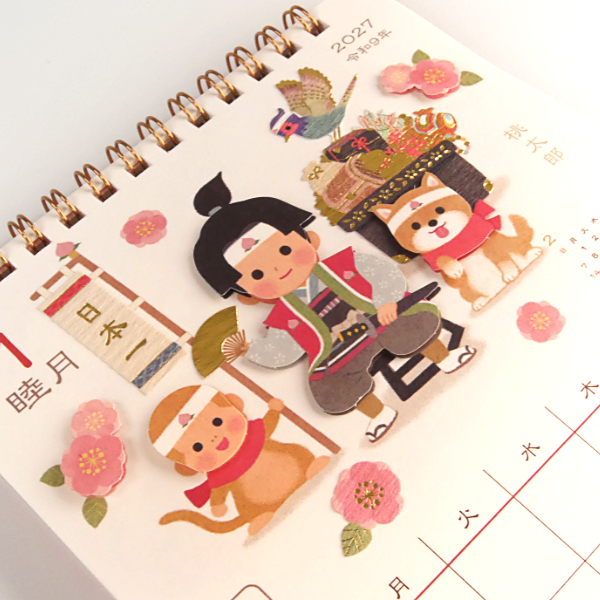
I was so happy to bring this cute 2027 calendar to my shop and thought that I would tell the stories that are depicted month by month. Here are the first six of those folk stories that I hope you will enjoy.
‘Mukashi mukashi…’ as they say.
*
1. The story of Momotarō (Peach Boy)
This is one of Japan's most famous traditional folktales so maybe you already know it. Here’s how the story goes...
Long ago, an elderly couple lived in a small village in Japan. One day, while out washing clothes by the water’s side, the old woman spotted an enormous peach floating down the river.
She took it home, and when they tried to cut it open, a beautiful, healthy baby boy appeared from inside! The old couple had no children of their own, so you can imagine their delight. They named him Momotarō, meaning 'Peach Boy', and raised him with great love. As a result, he grew into a strong and courageous young man.
One day, Momotarō decided to travel to Onigashima, the Island of the Ogres, to put a stop to the wicked oni who were causing trouble and stealing treasure. To sustain him on his journey, his mother prepared some delicious kibidango, millet dumplings.
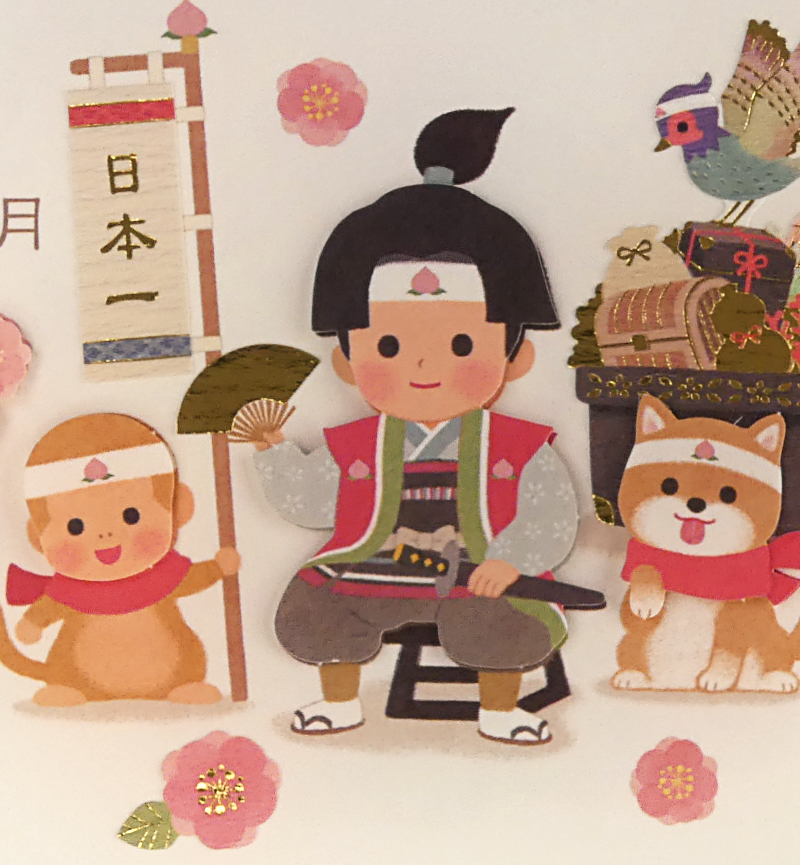
Along the way, he met a dog, a monkey and a pheasant. Each asked for a dumpling and Momotarō gladly shared his food. In return, the three animals pledged to join him on his adventure.
When they reached Onigashima, the brave companions launched their attack. The pheasant swooped down to peck the ogres' eyes out, the monkey scratched at their faces and the dog bit at their legs. All the while, Momotarō fought fearlessly at their side.
Finally overpowered, the oni surrendered.
*
Momotarō returned home with the stolen gold, silver and other treasures, bringing joy and prosperity to his family. And so the Peach Boy and his loyal companions became heroes, remembered for their courage, kindness and teamwork.
2. Keizōbō, the flying messenger fox
Long ago, near Tottori Castle in western Japan, lived an clever and intelligent fox named Keizōbō. Unlike the mischievous fox spirits of many Japanese tales, Keizōbō was a loyal and valued servant of the castle's lord, carrying important messages over astonishing distances.
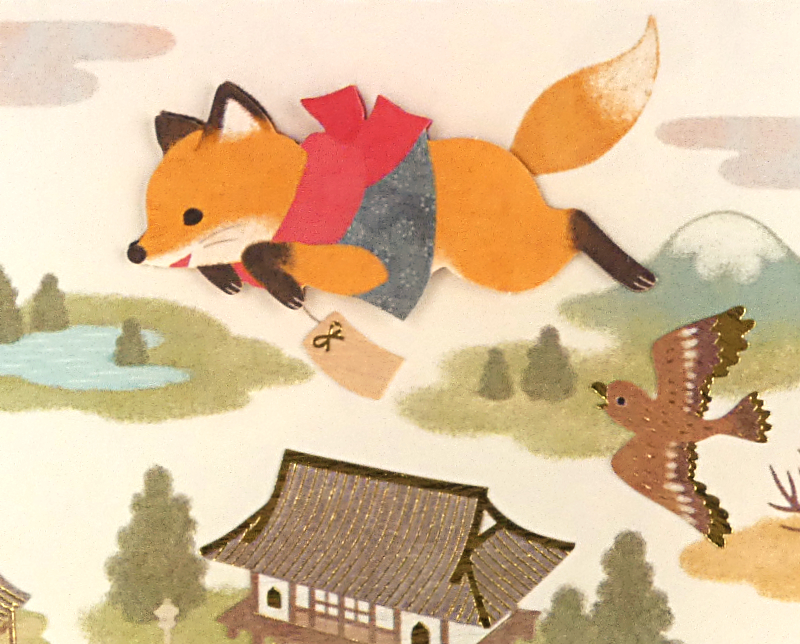
Disguised as a young samurai, he could travel all the way from Tottori to Edo (modern-day Tokyo) and back in just three days! His speed was so remarkable that he became famous as the flying messenger fox.
But, sadly, even Keizōbō had his weakness. One day, while returning to the castle from a mission, he passed a farmer's trap baited with a delicious-smelling roasted mouse. He had resisted the temptation on his outward journey, knowing full well that it was a trap. This time, however, the enticing aroma proved too much to bear.
*
He leapt towards the tasty morsel... and was caught!
When the lord of Tottori heard about Keizōbō's death, he was deeply saddened and in order to honour his faithful messenger, he ordered a small shrine to be built in his memory.
And so the remarkable messenger fox who had once raced across Japan became a guardian spirit, always remembered for his extraordinary speed and loyal service.
3. Danmari Kurabe - The silence contest
Once upon a time, an elderly couple were given seven delicious mochi (soft rice cakes) by a neighbour. The husband and wife happily chomped down three rice cakes each, leaving just one lonely mochi on the plate.
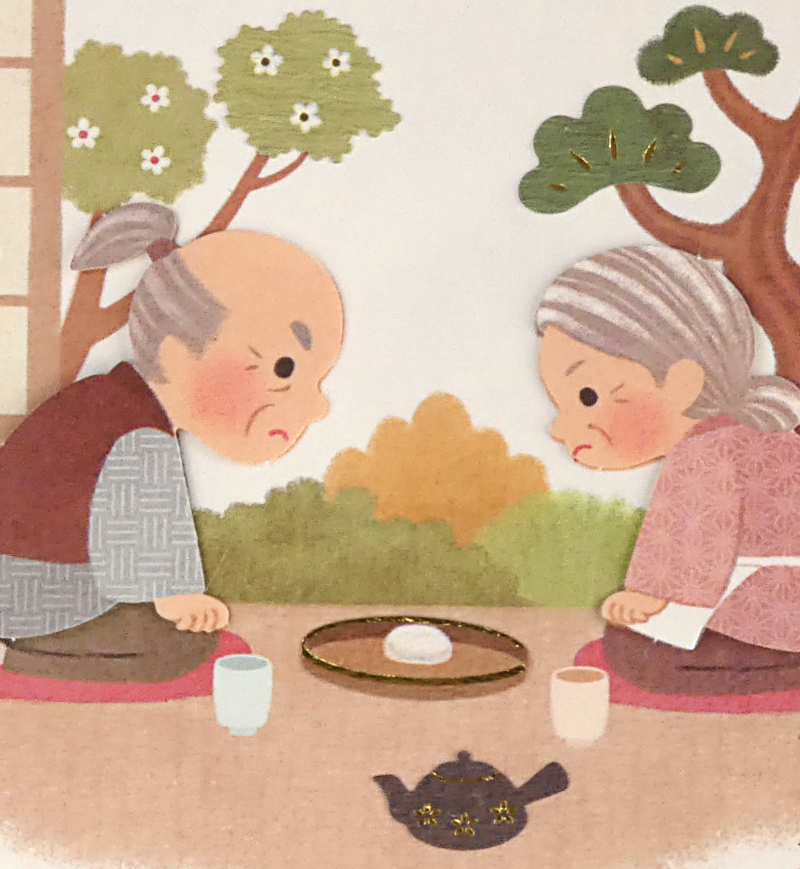
But who should have the last one? Neither was willing to give it up, so to decide they agreed to a danmari kurabe - a contest to see who could stay silent the longest. The rule is simple: the first person to speak loses and the winner gets to eat the last precious mochi.
The couple settled down to their contest, but with no talking allowed, the fun soon wore off. Eventually, they silently went to bed, each determined not to utter a word.
In the middle of the night, a thief crept into their home and began bundling up their belongings. The couple were wide awake and watched him help himself to their possessions - but they were so stubborn neither one would call out. After all, whoever broke the silence would lose the contest!
Just as the thief was about to make his getaway, he spotted the last mochi sitting on the table. What a tasty bonus! He reached out to take a bite, but the old woman couldn't bear to see her rice cake disappear.
'Hey! Don't you dare eat that mochi!' she shrieked at the top of her voice.
Startled, the thief dropped everything he'd stolen and fled into the night.
Hearing his wife break the silence, the old man instantly jumped out of bed to celebrate but not because she had just foiled a burglary.
'Ha!' he gloated, 'You spoke first! I win the contest so the mochi is mine.'
And with that, he gobbled up the last rice cake, leaving his wife to grumble over her lost prize and her husband's greed.
4. Hanasaka Jiisan, the old man who made the trees blossom
Once upon a time, a kind-hearted old man and his wife adopted a little white dog called Shiro (which, rather aptly, means 'white' in Japanese!).
One day, Shiro began barking and scratching at a particular spot in the garden. The old man grabbed his spade to dig down and there, to his astonishment, he uncovered a treasure of gold coins.
The couple’s greedy neighbour heard about their good fortune and borrowed Shiro, hoping to find treasure of his own. But the dog led him only to rubbish, and in a terrible fit of anger, the neighbour killed poor Shiro.
Heartbroken, the old man buried his beloved Shiro and planted a tree over his grave. In time, it grew into a fine tree. One night, Shiro appeared to his owner in a dream and told him to cut down the tree and make a rice-pounding mortar from its wood.
When the couple used the mortar to make mochi, the gooey rice miraculously turned into gold! Once again, their greedy neighbour is envious and wanted to try it too. But when he borrowed the mortar, it produced only filth and rubbish. Furious, he smashed it up and burned the pieces.
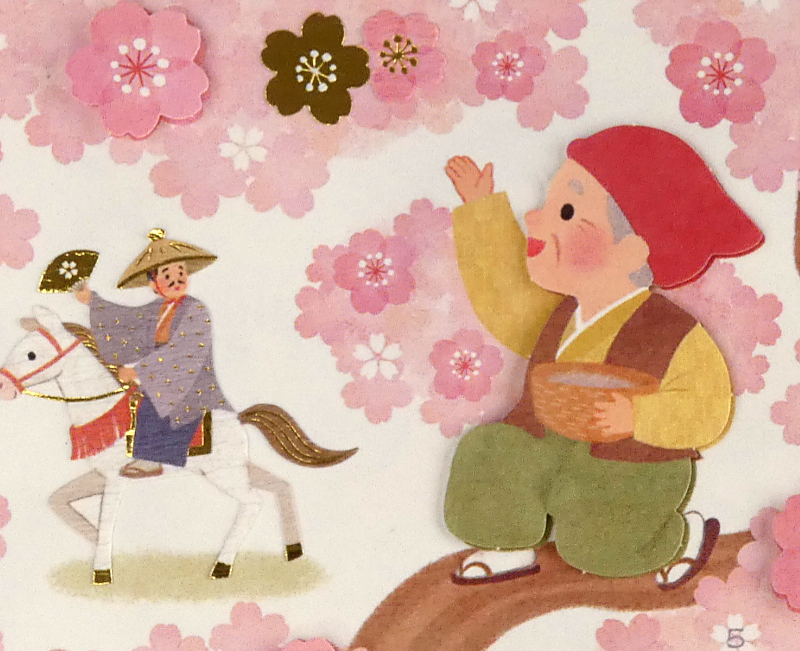
The kind old man gathered the ashes and, remembering Shiro's instructions from another dream, he sprinkled them over a withered cherry tree. To his amazement, even though it was the middle of winter, the bare branches of the tree burst into beautiful blossom.
A passing daimyo (feudal lord) was so delighted to witness this sight that he showered the old man with rich gifts and praise.
*
Seeing this, the greedy neighbour still doesn’t give up and tries to scatter the stove ashes himself to impress the lord. But instead of blooming flowers, the ash blew into the daimyo's face, in his eyes and up his nose! The powerful lord was furious and punished the neighbour for his foolish behaviour by throwing him in prison.
Meanwhile, the kind old man and his wife were rewarded for their goodness, and Shiro's memory lived on through the wonderful things he had made possible.
5. Kintarō, the golden boy
Long ago, in the forested Ashigara Mountains of Japan, lived a remarkable boy named Kintarō. Raised by his mother, who was said to be a mysterious yama-uba (mountain witch), he grew up surrounded by the mountain wildlife rather than other children.
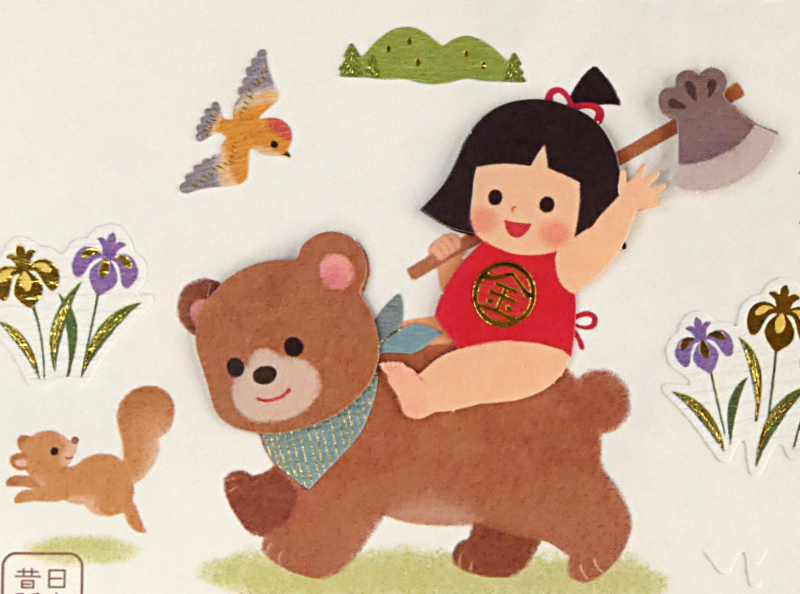
Kintarō was no ordinary boy. With his bright red bib bearing the character kin (金), meaning 'gold', and a woodcutter's axe over his shoulder, he spent his days playing with the forest creatures. He wrestled bears, befriended deer and monkeys and was so strong that he could uproot enormous trees. One famous tale tells how he felled a giant tree to make a bridge across a rushing stream.
*
As Kintarō grew older, his extraordinary strength caught the attention of Minamoto no Yorimitsu, a renowned samurai. Impressed by the young man's courage and ability, Yorimitsu took him into his service.
Kintarō became known as Sakata no Kintoki and grew into a mighty warrior, joining Yorimitsu's band of trusted companions, the Four Heavenly Kings.
He had many adventures but among his greatest was the expedition to defeat Shuten-dōji, a fearsome oni who terrorised the surrounding countryside. The boy who had once wrestled bears in the mountains had become a hero, strong and brave.
Today, Kintarō remains a symbol of strength, courage and good health. His dolls and banners are traditionally displayed for Kodomo no Hi (こどもの日), Japan's Children's Day, on 5 May, in the hope that children will grow up strong and spirited, just like the Golden Boy.
6. Oitekebori, the ‘Leave it behind’ river
This eerie tale comes from Honjo, an area of Edo (modern day Tokyo), during the Edo period.
Our story begins with a young fisherman who spent the day fishing at a quiet waterway. Having had good luck all day, he was astounded to have caught more beautiful, fresh fish than he could have hoped for. Happy with his success, he packed up his basket and set off for home before nightfall.
However, as he walked away from the water's edge, the air suddenly turned icy cold and an eerie, disembodied voice rose up from the dark water, calling out a chilling command:
'Oiteke... oiteke...'
'Leave it behind... leave it behind...'
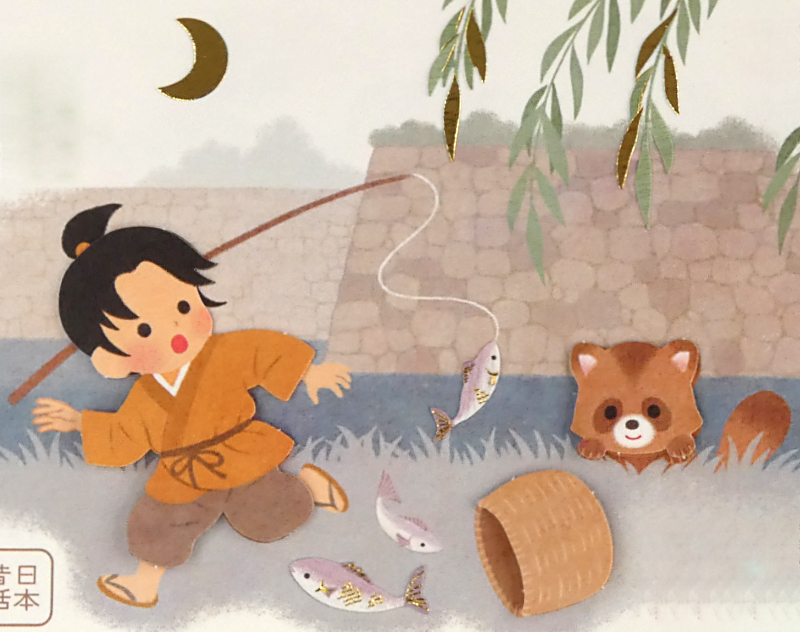
Terrified, the fisherman clutched his basket and ran all the way home, determined not to surrender his precious catch to some unseen creature lurking in the water.
Safely indoors, he opened his basket to show his family his splendid haul. But to his horror, it was completely empty!
Every last fish had vanished. Had a mischievous tanuki used its magical powers to trick him, or was something even stranger at work?
*
Whatever the explanation, the mysterious voice of Oitekebori has been haunting Japanese folklore ever since...
Folk tales for a New Year
I hope you have enjoyed this collection of little tales. They’re heavily abridged, of course, with maybe a little artistic licence but if the images and stories have fired your curiosity, perhaps you’ll be tempted to seek out more information about the characters and meanings.
In the meantime, you might enjoy the pictures from this calendar that so charmingly depicts a scene from each story.
Japanese calendars at Hatsukoi